Altura
One platform to manage products, orders, customers and analytics across every sales channel.
CLIENT
Concept Project
SERVICE
Product Design
Industry
E-commerce SaaS
Year
2026

Project Goal
The goal of this project was to design a modern commerce intelligence platform that brings together products, orders, customers, inventory, and analytics into a single workspace.
Many e-commerce businesses rely on multiple disconnected tools to manage their operations, making it difficult to gain a complete overview of performance and make informed decisions quickly.
The challenge was to create an intuitive platform that reduces complexity while helping teams understand their business through clear data visualization, AI-powered insights, and a scalable user experience.

Result
The final outcome is a comprehensive SaaS platform designed to support everyday operations for modern e-commerce businesses.
Altura combines operational management with advanced analytics in a clean and intuitive interface, allowing users to monitor performance, manage products and customers, track inventory, and receive AI-powered recommendations from one centralized platform.
The result is a flexible product concept that demonstrates a complete product design process—from strategy and information architecture to responsive UI and design system creation.
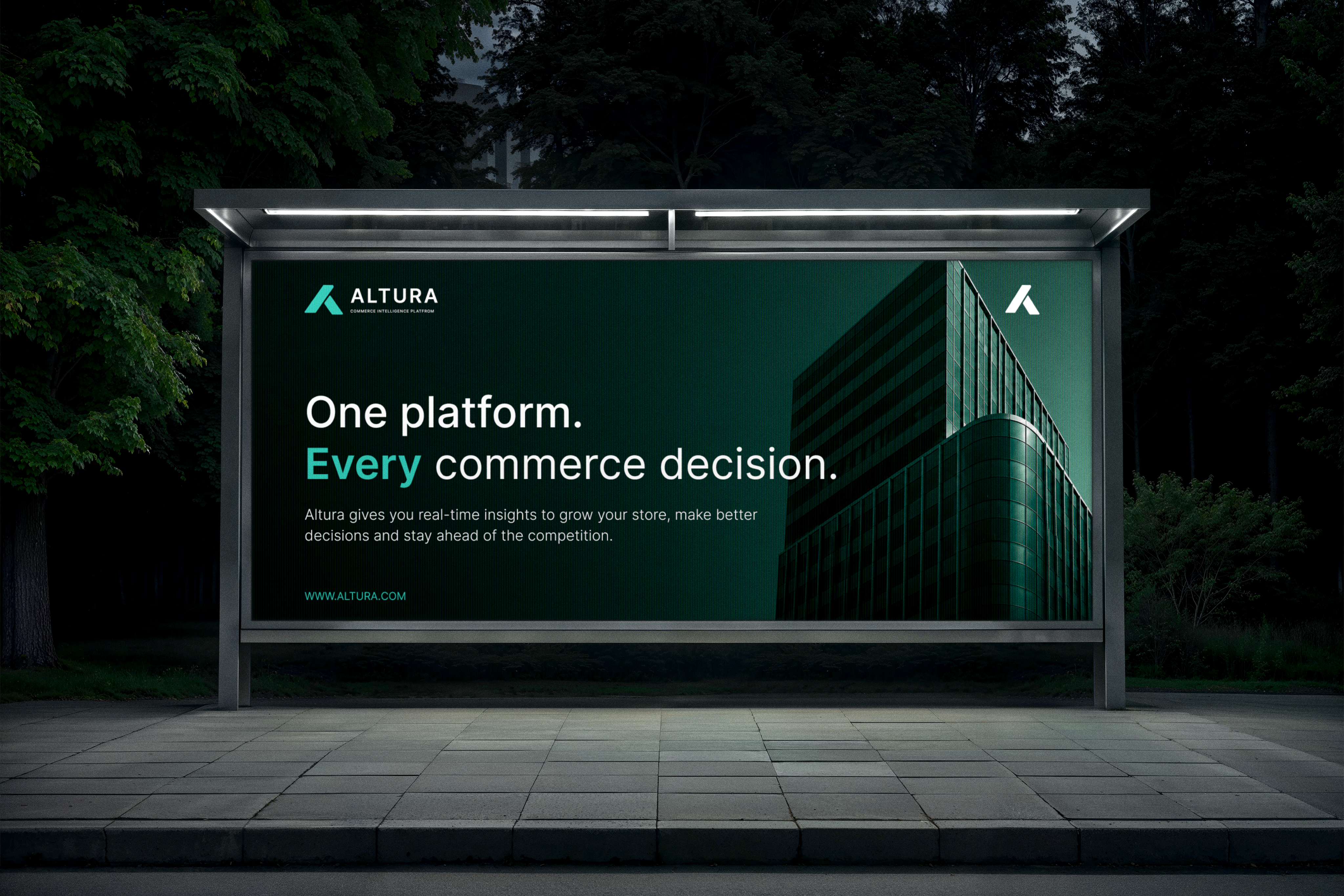
[Step 01] Product Research & Information Architecture
The design process started by defining the core structure of the platform and identifying the essential modules required for daily business operations.
Special attention was given to organizing information in a logical hierarchy, ensuring users could navigate between products, customers, orders, inventory, analytics, and reports with minimal cognitive effort.
This foundation established a scalable architecture capable of supporting future platform growth without compromising usability.
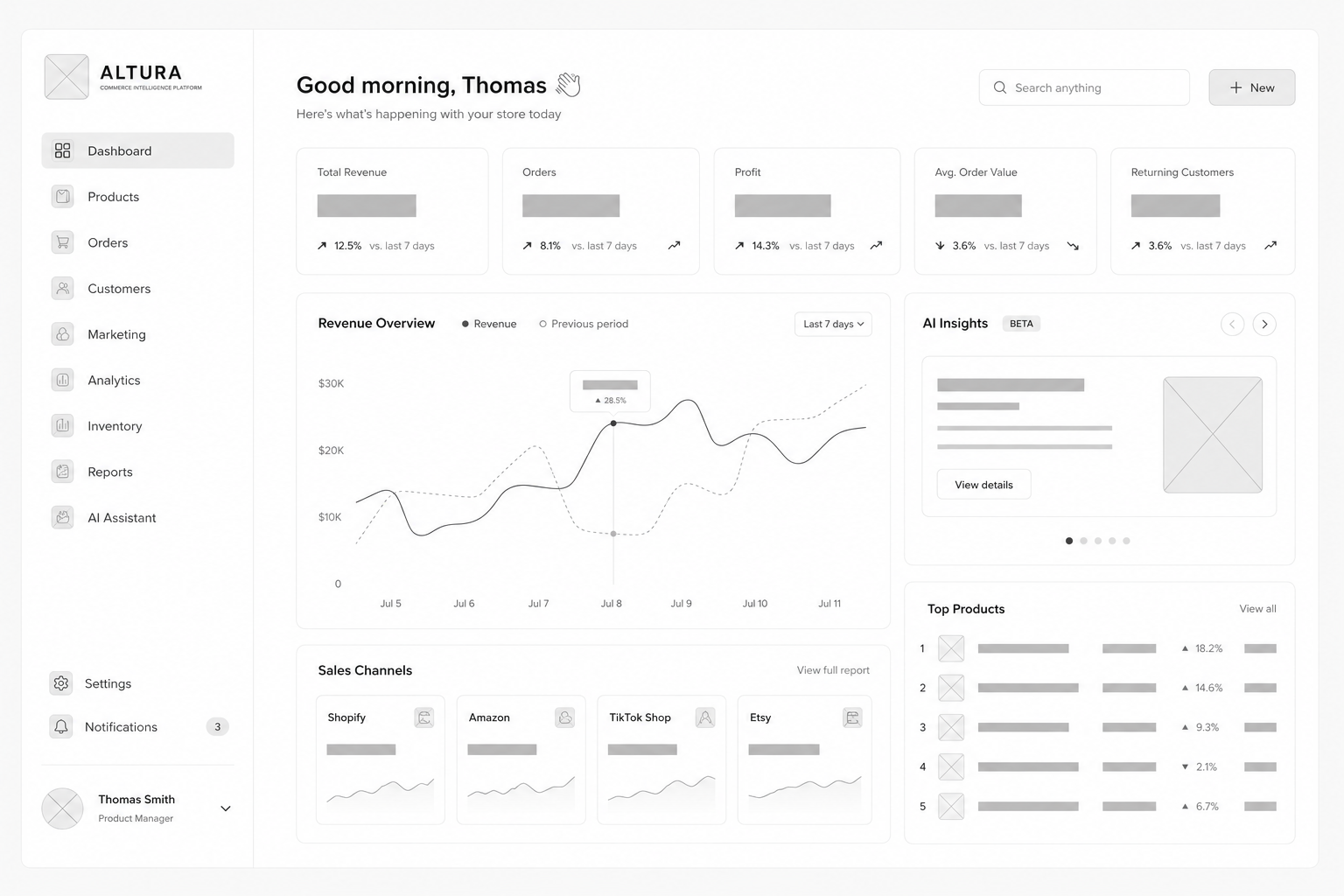
[Step 02] Wireframing & User Experience
With the platform architecture defined, low-fidelity wireframes were created to validate user flows before moving into visual design.
The objective was to simplify complex workflows by reducing unnecessary interactions and presenting information in a clear, predictable layout.
Every decision focused on helping users complete tasks faster while maintaining consistency across desktop and mobile experiences.
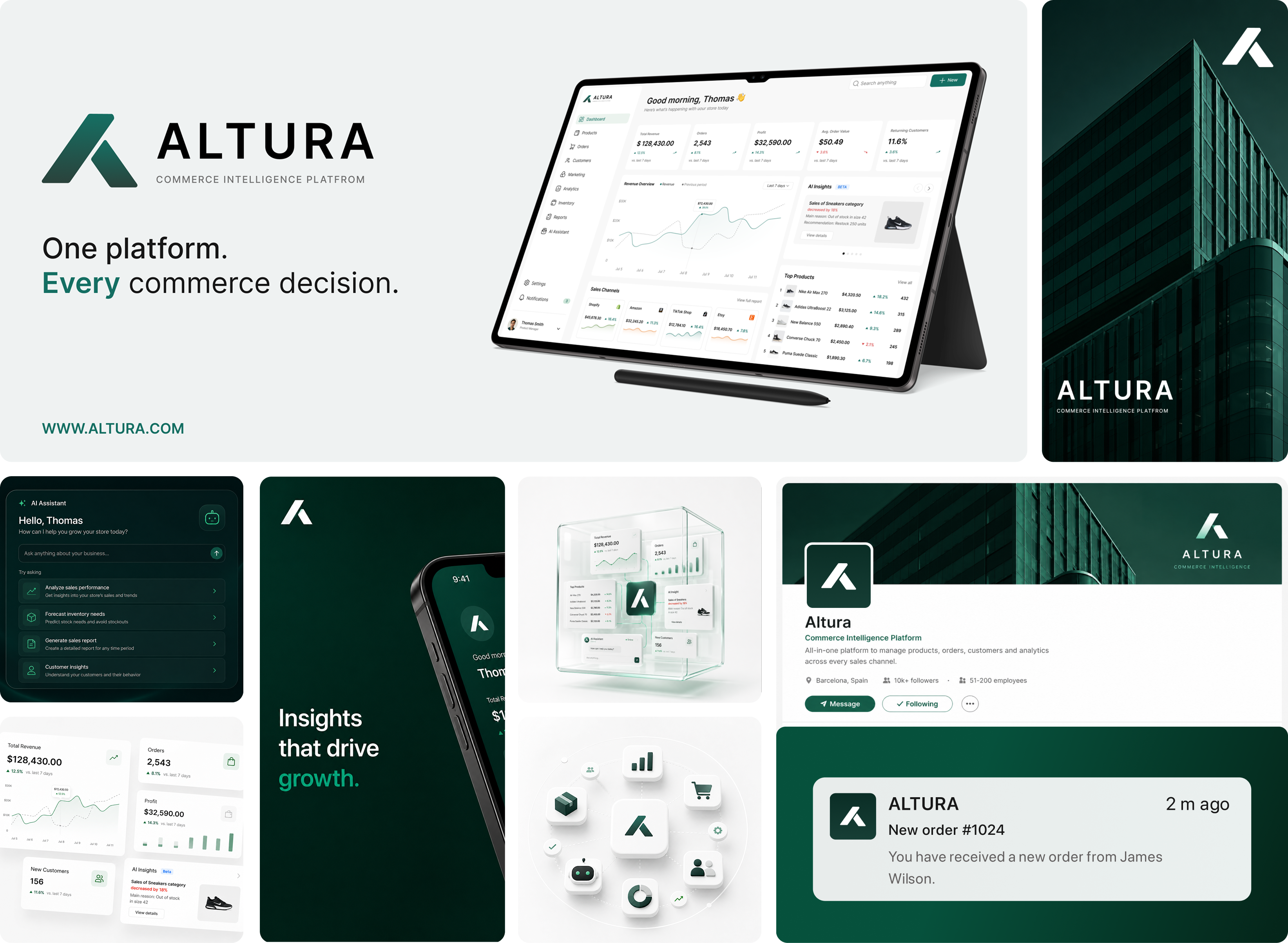
[Step 03][A] Design Language
The visual identity was developed around the concept of Calm Intelligence—a clean, minimal design language that communicates trust, clarity, and precision.
A restrained color palette, generous spacing, and carefully balanced typography create an interface that remains readable even when displaying large volumes of business data.
Every visual element was designed to support usability first while reinforcing a premium product experience.
[A] / [B] Color & Typography
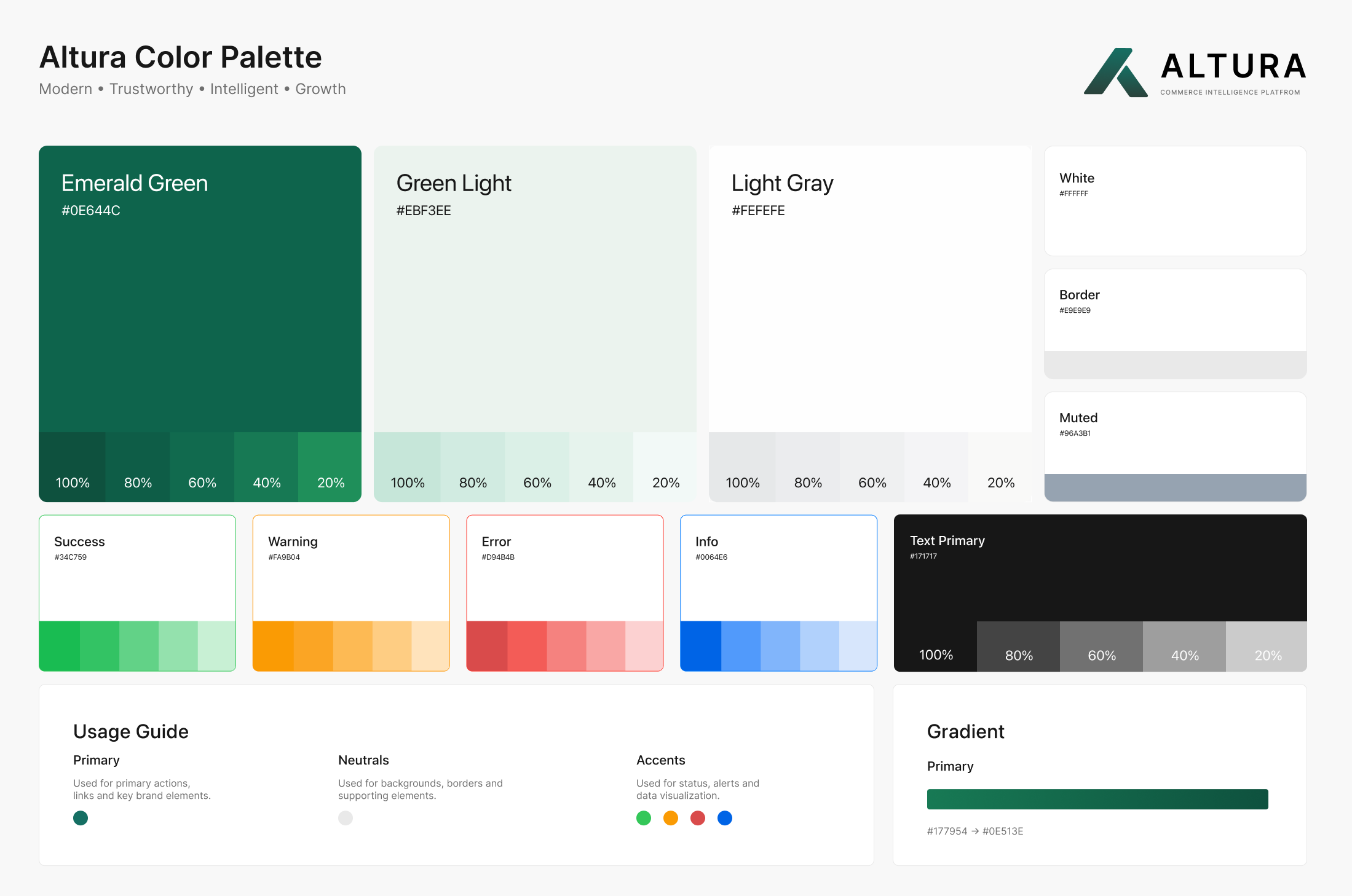
The interface uses a neutral foundation combined with a refined emerald accent to create a modern and timeless visual identity.
Neutral backgrounds keep the focus on the data, while carefully applied accent colors guide attention toward key actions, status indicators, and important business metrics.
Inter was selected as the primary typeface for its exceptional readability across dashboards, tables, and analytical interfaces.
Its balanced proportions, clear hierarchy, and excellent support for numerical data make it an ideal choice for enterprise software where information density is a priority.
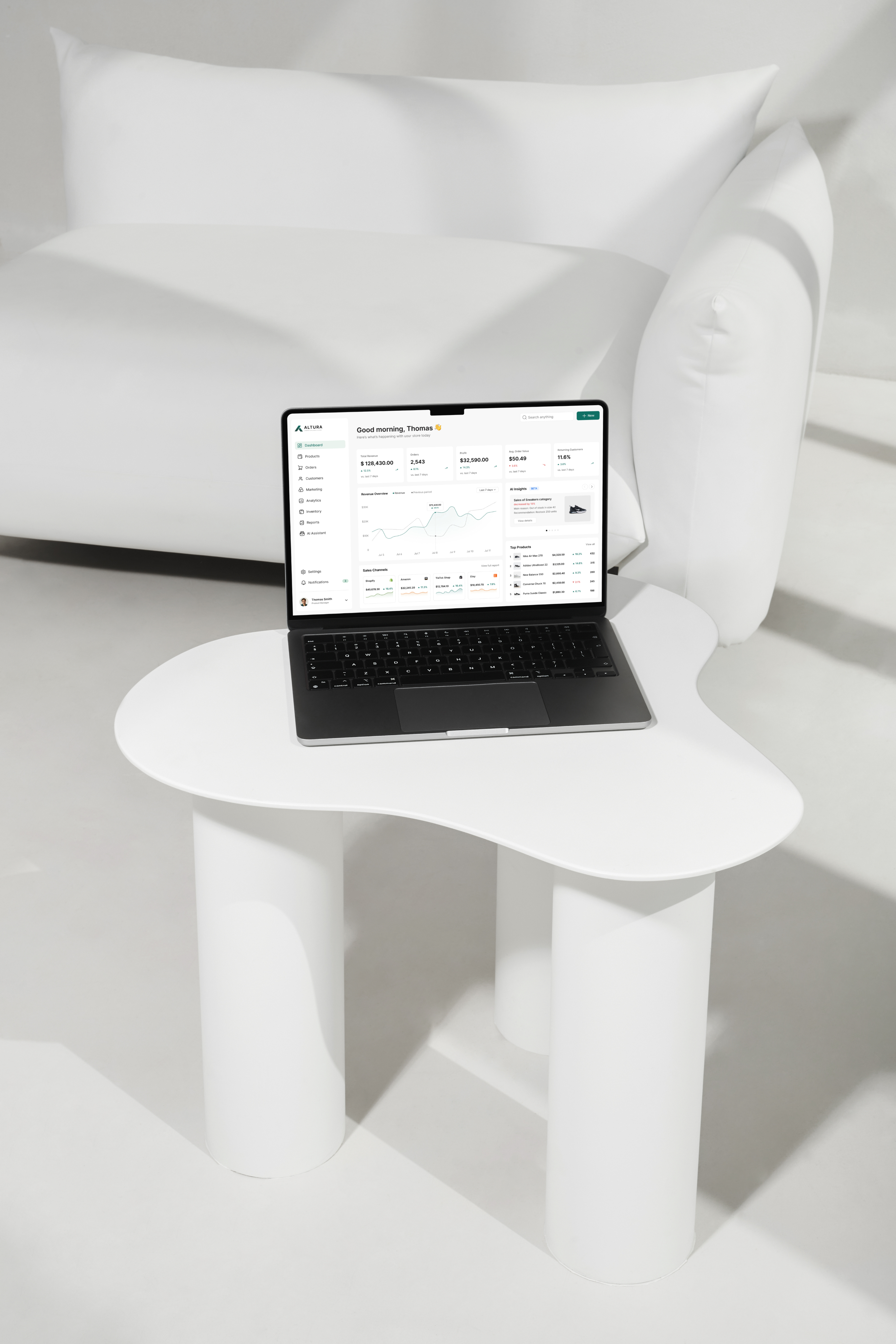
Dashboard Experience
The dashboard provides an instant overview of business performance through key metrics, interactive charts, AI-powered insights, and sales channel monitoring.
Its modular layout allows users to identify opportunities and respond to changes without navigating across multiple systems.
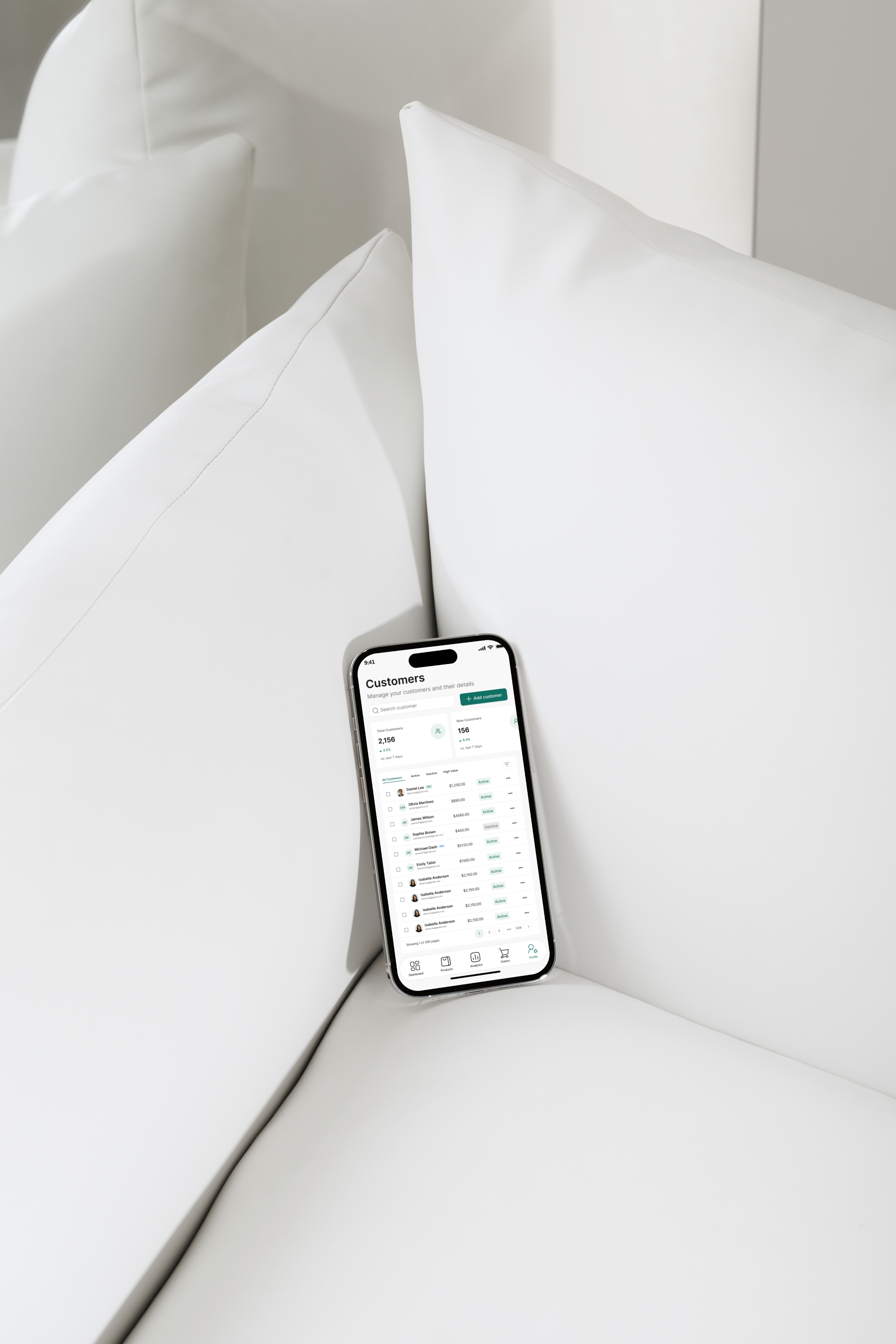
Customer Management
Customer profiles combine purchase history, lifetime value, segmentation, and engagement data into one centralized workspace.
This enables businesses to better understand customer behavior and build stronger long-term relationships.
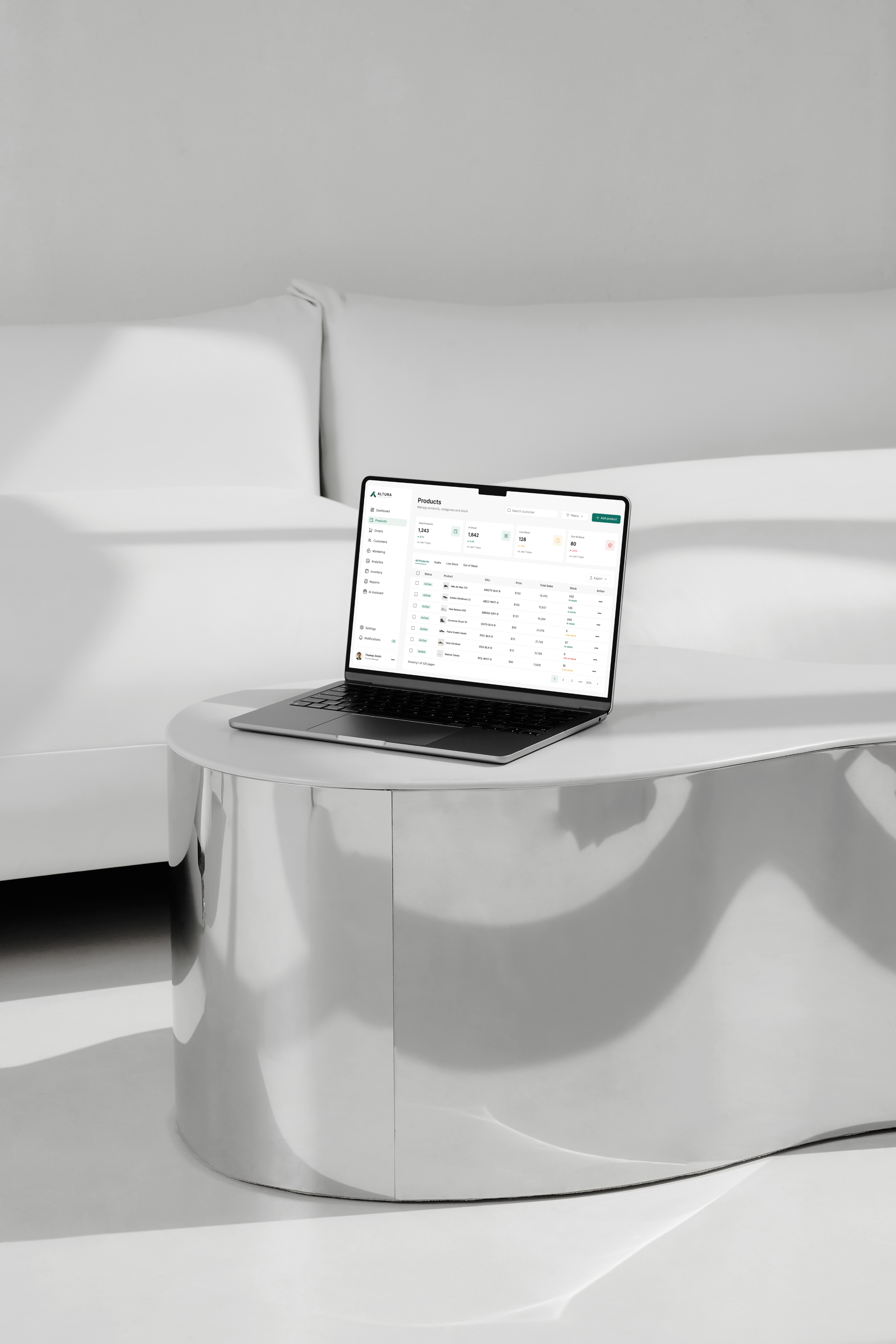
Product Management
The product management experience simplifies inventory control, pricing, product organization, and performance monitoring through an intuitive interface optimized for daily operations.
Altura
One platform to manage products, orders, customers and analytics across every sales channel.
CLIENT
Concept Project
SERVICE
Product Design
Industry
E-commerce SaaS
Year
2026
Project Goal
The goal of this project was to design a modern commerce intelligence platform that brings together products, orders, customers, inventory, and analytics into a single workspace.
Many e-commerce businesses rely on multiple disconnected tools to manage their operations, making it difficult to gain a complete overview of performance and make informed decisions quickly.
The challenge was to create an intuitive platform that reduces complexity while helping teams understand their business through clear data visualization, AI-powered insights, and a scalable user experience.
Result
The final outcome is a comprehensive SaaS platform designed to support everyday operations for modern e-commerce businesses.
Altura combines operational management with advanced analytics in a clean and intuitive interface, allowing users to monitor performance, manage products and customers, track inventory, and receive AI-powered recommendations from one centralized platform.
The result is a flexible product concept that demonstrates a complete product design process—from strategy and information architecture to responsive UI and design system creation.
[Step 01] Product Research & Information Architecture
The design process started by defining the core structure of the platform and identifying the essential modules required for daily business operations.
Special attention was given to organizing information in a logical hierarchy, ensuring users could navigate between products, customers, orders, inventory, analytics, and reports with minimal cognitive effort.
This foundation established a scalable architecture capable of supporting future platform growth without compromising usability.
[Step 02] Wireframing & User Experience
With the platform architecture defined, low-fidelity wireframes were created to validate user flows before moving into visual design.
The objective was to simplify complex workflows by reducing unnecessary interactions and presenting information in a clear, predictable layout.
Every decision focused on helping users complete tasks faster while maintaining consistency across desktop and mobile experiences.
[Step 03][A] Design Language
The visual identity was developed around the concept of Calm Intelligence—a clean, minimal design language that communicates trust, clarity, and precision.
A restrained color palette, generous spacing, and carefully balanced typography create an interface that remains readable even when displaying large volumes of business data.
Every visual element was designed to support usability first while reinforcing a premium product experience.
[A] / [B] Color & Typography
The interface uses a neutral foundation combined with a refined emerald accent to create a modern and timeless visual identity.
Neutral backgrounds keep the focus on the data, while carefully applied accent colors guide attention toward key actions, status indicators, and important business metrics.
Inter was selected as the primary typeface for its exceptional readability across dashboards, tables, and analytical interfaces.
Its balanced proportions, clear hierarchy, and excellent support for numerical data make it an ideal choice for enterprise software where information density is a priority.
Dashboard Experience
The dashboard provides an instant overview of business performance through key metrics, interactive charts, AI-powered insights, and sales channel monitoring.
Its modular layout allows users to identify opportunities and respond to changes without navigating across multiple systems.
Customer Management
Customer profiles combine purchase history, lifetime value, segmentation, and engagement data into one centralized workspace.
This enables businesses to better understand customer behavior and build stronger long-term relationships.
Product Management
The product management experience simplifies inventory control, pricing, product organization, and performance monitoring through an intuitive interface optimized for daily operations.
Altura
One platform to manage products, orders, customers and analytics across every sales channel.
CLIENT
Concept Project
SERVICE
Product Design
Industry
E-commerce SaaS
Year
2026
Project Goal
The goal of this project was to design a modern commerce intelligence platform that brings together products, orders, customers, inventory, and analytics into a single workspace.
Many e-commerce businesses rely on multiple disconnected tools to manage their operations, making it difficult to gain a complete overview of performance and make informed decisions quickly.
The challenge was to create an intuitive platform that reduces complexity while helping teams understand their business through clear data visualization, AI-powered insights, and a scalable user experience.
Result
The final outcome is a comprehensive SaaS platform designed to support everyday operations for modern e-commerce businesses.
Altura combines operational management with advanced analytics in a clean and intuitive interface, allowing users to monitor performance, manage products and customers, track inventory, and receive AI-powered recommendations from one centralized platform.
The result is a flexible product concept that demonstrates a complete product design process—from strategy and information architecture to responsive UI and design system creation.
[Step 01] Product Research & Information Architecture
The design process started by defining the core structure of the platform and identifying the essential modules required for daily business operations.
Special attention was given to organizing information in a logical hierarchy, ensuring users could navigate between products, customers, orders, inventory, analytics, and reports with minimal cognitive effort.
This foundation established a scalable architecture capable of supporting future platform growth without compromising usability.
[Step 02] Wireframing & User Experience
With the platform architecture defined, low-fidelity wireframes were created to validate user flows before moving into visual design.
The objective was to simplify complex workflows by reducing unnecessary interactions and presenting information in a clear, predictable layout.
Every decision focused on helping users complete tasks faster while maintaining consistency across desktop and mobile experiences.
[Step 03][A] Design Language
The visual identity was developed around the concept of Calm Intelligence—a clean, minimal design language that communicates trust, clarity, and precision.
A restrained color palette, generous spacing, and carefully balanced typography create an interface that remains readable even when displaying large volumes of business data.
Every visual element was designed to support usability first while reinforcing a premium product experience.
[A] / [B] Color & Typography
The interface uses a neutral foundation combined with a refined emerald accent to create a modern and timeless visual identity.
Neutral backgrounds keep the focus on the data, while carefully applied accent colors guide attention toward key actions, status indicators, and important business metrics.
Inter was selected as the primary typeface for its exceptional readability across dashboards, tables, and analytical interfaces.
Its balanced proportions, clear hierarchy, and excellent support for numerical data make it an ideal choice for enterprise software where information density is a priority.
Dashboard Experience
The dashboard provides an instant overview of business performance through key metrics, interactive charts, AI-powered insights, and sales channel monitoring.
Its modular layout allows users to identify opportunities and respond to changes without navigating across multiple systems.
Customer Management
Customer profiles combine purchase history, lifetime value, segmentation, and engagement data into one centralized workspace.
This enables businesses to better understand customer behavior and build stronger long-term relationships.
Product Management
The product management experience simplifies inventory control, pricing, product organization, and performance monitoring through an intuitive interface optimized for daily operations.